

Neurofeedback Explained — How Brainwave Training Works in Wilmington DE
Neurofeedback Explained — How Brainwave Training Works in Wilmington DE
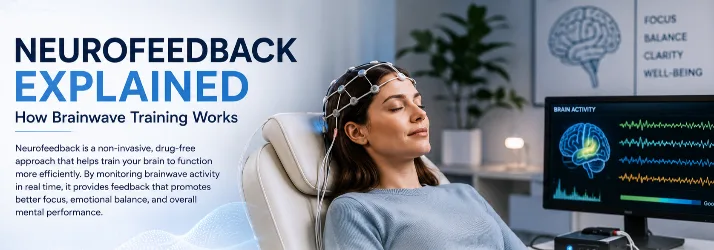
Neurofeedback is often described as "a gym for your brain." Here's what that actually means, and how the technology behind it works.
Step One: Mapping the Brain in Wilmington DE
Neurofeedback starts with a quantitative electroencephalogram (qEEG) — a painless recording of your brain's electrical activity using sensors placed on the scalp. This creates a map showing which areas of the brain show patterns that are unusually fast, slow, or irregular compared to typical, well-regulated brain activity.
Step Two: Understanding Brainwave Patterns
Your brain produces different types of electrical patterns depending on what you're doing — deep sleep, focused work, relaxed alertness, and anxious rumination all show up differently on a qEEG. When certain patterns are over- or under-represented in specific brain regions, it can correspond to real-world symptoms like difficulty focusing, poor sleep, or a persistently anxious baseline state.
Step Three: Training Through Feedback
Once dysregulated patterns are identified, a treatment protocol is built around them. During sessions, patients typically watch a video or play a simple game that is directly linked to their own brainwave activity in real time. When the brain produces more of the target pattern (for example, calmer, more focused activity), the video plays smoothly or the game responds positively; when it drifts away from that pattern, the feedback pauses or changes. Over repeated sessions, the brain gradually learns to produce more of the desired pattern on its own — similar to how muscles strengthen with repeated, targeted exercise.
Why It's Non-Invasive
Neurofeedback doesn't involve medication or anything entering the body — sensors only read electrical activity, they don't stimulate the brain. This is a large part of its appeal for people looking for drug-free approaches to focus, mood, and sleep.
The Takeaway
Neurofeedback is essentially a structured feedback loop that helps the brain practice healthier patterns of activity over time. In our next article, we'll cover the specific groups of people who tend to see the most benefit from this approach.
Educational content only; not a substitute for medical advice. Individual results vary and typically require a series of sessions rather than a single visit.

OFFICE HOURS
Monday
8:30am - 6:00pm
Tuesday
2:30pm - 7:00pm
Wednesday
8:30am - 6:00pm
Thursday
8:30am - 6:00pm
Friday
8:00am - 12:00pm
Saturday & Sunday
Closed

Quest Chiropractic
1601 Concord Pike Suite 65-67
Wilmington, DE 19803